
Online misogyny is moving from boys’ feeds into classrooms, homes and real-life attitudes
MMS Staff
11 Jun 2026
4-min read
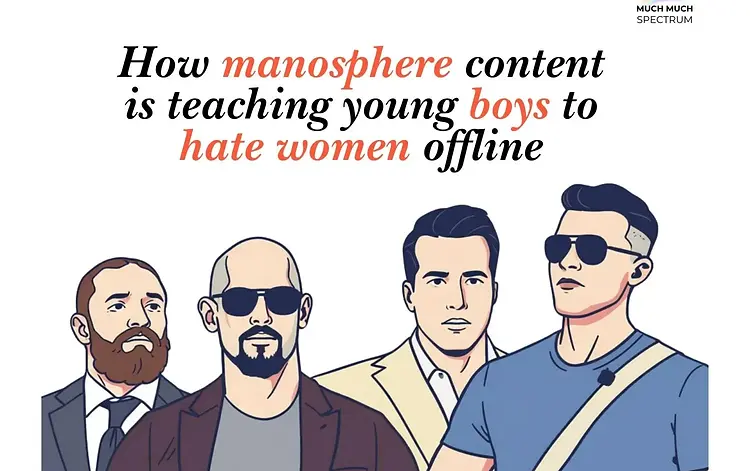
The manosphere is no longer staying inside boys’ phones. Its language is turning up in classrooms. Its ideas are surfacing at dinner tables. Its contempt for women is being repeated by children who are still young enough to need help understanding the weight of their own words.
For years, misogynistic influencers have sold toxic masculinity as confidence, discipline, success and “male self-improvement.” Through short videos, podcasts, gaming spaces and algorithm-driven feeds, Andrew Tate-style content can reach boys long before they are old enough to question what it is teaching them. And it is handing out a script where women are inferior, mothers exist to serve, female teachers can be disrespected and violence against women can be mocked, excused or treated as normal.
That is why online misogyny is no longer only an internet safety problem. It is now a parenting problem, a classroom problem and a gender-based violence problem.
When online hate leaves the screen
Misogyny rarely arrives in a child’s life looking dangerous. It often comes dressed as a joke, a viral clip, a podcast line, a gaming insult, a gym video or a blunt “truth” about women. To a boy scrolling after school, it may look like entertainment. But repetition has power. A phrase becomes funny. A joke becomes familiar. An attitude becomes behaviour.
In Australia, teachers have warned that Andrew Tate-style misogyny is already entering classrooms. Some female teachers have said sexist language and behaviour from boys have made them feel unsafe at work. The issue is not simply bad manners or teenage rudeness. It is boys challenging women’s authority, repeating online misogyny and treating female educators as people they do not have to respect.
A classroom cannot function if girls are expected to absorb sexism and women teachers are expected to manage misogyny as ordinary misbehaviour. When contempt for women becomes a performance of masculinity, the damage does not stay online. Now, a similar warning is coming from inside Irish homes.
The warning from Ireland
Sonas, a domestic violence charity in Ireland that supports women and children through refuges and safe homes, has warned that boys as young as eight are repeating degrading views about women.
In one reported case, an eight-year-old boy called his mother a “dish pig” and threw objects at her after he disliked his dinner. The phrase is being discussed here as an offensive insult aimed at women and care work. It is not a comment on people who do dishwashing work.
The deeper concern is how cooking, cleaning and domestic labour are being turned into tools to humiliate mothers. This points to a worldview being sold to boys online: that care work is women’s duty, that mothers are there to serve and that boys are entitled to punish or degrade women when they do not get what they want.
The child’s mother reportedly had parental restrictions on his social media. Yet masculinity influencer content was still accessible. For many parents, that is the most frightening part.
They may be checking phones, setting limits and trying to monitor what their children watch. But misogynistic content does not always come from obvious extremist accounts. It can travel through reposted clips, meme pages, reaction videos, gaming communities and accounts that appear harmless at first. Algorithms do not need a child to search for hate. They only need him to pause long enough for the next video to arrive.
When survivors hear misogyny at home
Sonas has also raised another painful concern. Some women escaping domestic violence are now facing hostility from their own children after leaving abusive homes. In one case, a woman was describing the physical abuse she had experienced from her husband when her teenage son said she “deserved it.”
For a survivor trying to rebuild safety, that sentence can be devastating. It can make the violence feel as if it has followed her into another room, in another voice. This is where online misogyny connects to coercive control. Coercive control is not only physical violence; it can include humiliation, intimidation, emotional abuse and the belief that one person has the right to dominate another.
A child who repeats misogyny should not be written off as dangerous or evil. But adults cannot ignore what those ideas are teaching him. Boys need guidance, boundaries and support before online hate hardens into a worldview.
The responsibility cannot sit with parents alone
Sonas is urging Ireland’s media regulator, Coimisiún na Meán, to strengthen online safety rules. The charity wants platforms to reduce the algorithmic promotion of misogynistic content, improve age-gating and limit children’s exposure to material that normalises coercive control, violence against women or hatred of women.
But regulation alone will not be enough. Parents, teachers and caregivers also need to treat sudden hostility towards women, mothers, girls or female teachers as a warning sign. Jokes about women belonging in the kitchen, contempt for feminism, anger at boundaries or claims that women are inferior should not be brushed off as harmless internet humour. The response does not have to be panic. It has to be attention.
Where did you hear that? What do you think it means? Why is that funny? How do you think your mother felt when you said it? These questions are not small. They are the beginning of intervention.
Boys deserve better than algorithms that turn insecurity into resentment. They deserve better than influencers who sell domination as strength. They deserve better than a culture that tells them masculinity must come at the cost of women’s safety. The goal is not to fear boys. The goal is to reach them before misogyny does.
Much much relate? Share it now!